Netflix Mood- Based Discovery
Redesigning content discovery to match viewers' emotional state in the moment, reducing decision fatigue and increasing engagement.
ROLE
Product Designer
UX Researcher
TIMELINE
TOOLS
Figma, FigJam, Google Forms
PROJECT AT A GLANCE
Problem
Netflix's algorithm recommends based on history, not current mood. Users browse for 10+ minutes and often leave without watching anything.
Solution
A one-tap mood selector that returns a single curated recommendation, lowest possible friction, zero added cognitive load.
Outcome
92% User satisfaction. 88% of the users would use it regularly. Almost all the users completed the full flow unprompted.
PROJECT AT A GLANCE
Problem
Netflix's algorithm recommends based on history, not current mood. Users browse for 10+ minutes and often leave without watching anything.
Solution
A one-tap mood selector that returns a single curated recommendation, lowest possible friction, zero added cognitive load.
Outcome
92% User satisfaction. 88% of the users would use it regularly. Almost all the users completed the full flow unprompted.
01 - PROBLEM
The paradox of too much choice
Netflix's content library is a strength that creates a real friction point: users spend
significant time browsing without finding something that matches how they feel in the moment.
The existing algorithm is history-based — it surfaces what you've liked before, not what you're in the mood for right now. Those are different questions.
🎯 DESIGN QUESTION:
"How might we help users find content that matches their current mood — without adding more cognitive load to an already overwhelming experience?"
02 - COMPETITIVE CONTEXT
How others approach this
Before designing anything, I looked at how other platforms handle mood or context-based discovery.
Strong precedent
Mood-based playlists ("Focus", "Chill")
Users don't search - they browse by feeling.
Gap identified
History- and popularity-based rows
"Because you watched X" is the primary control signal. Mood is not a first-class input.
Same Gap
Curated editorial collections
Staff picked themes, but no user-driven mood input.
The pattern across competitors: Mood works well as a discovery input, but none of the major video platforms treat it as a primary entry point.
03 - RESEARCH
Survey Findings
I ran a Google Form survey with 40 participants (ages 18–45, all active Netflix users) to pressure-test the problem hypothesis before designing anything.
Selected verbatim responses
04 - IDEATION
What I explored — and what I cut
I used FigJam to map out several directions before committing to any of them.
Discarded
Multi-step Questionnaire
Discarded
Tappable mood tags
Chosen
Single recommendation output
Chosen
Under 2 min to a recommendation
Zero added cognitive load
Feels native to Netflix UI
Easy to adjust or undo
The solution
05 - SOLUTION
Mood Picks — a three-step flow
Access
Via "Mood Picks" in the
navigation or a "Need Ideas?" button on the home screen.
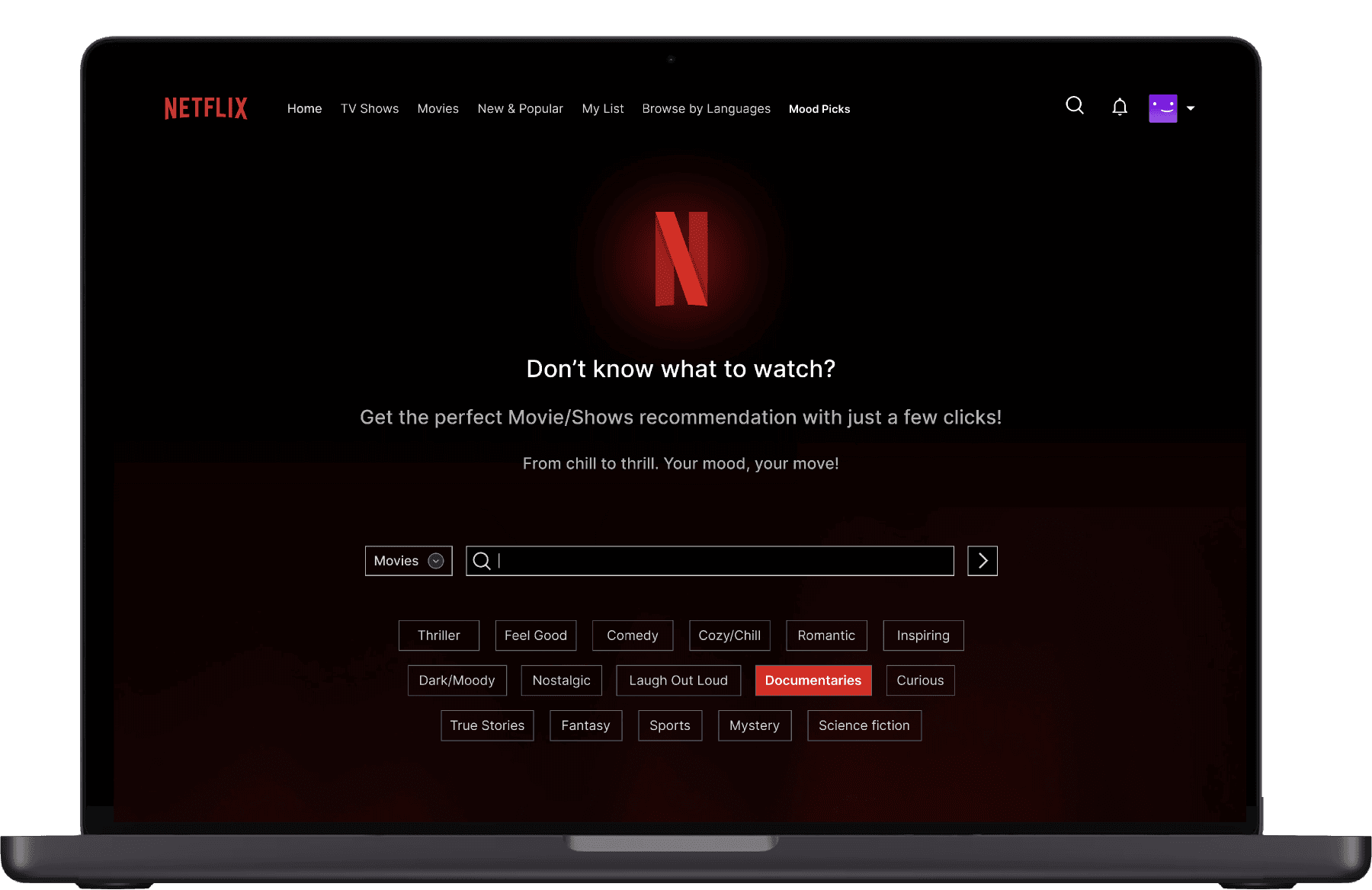
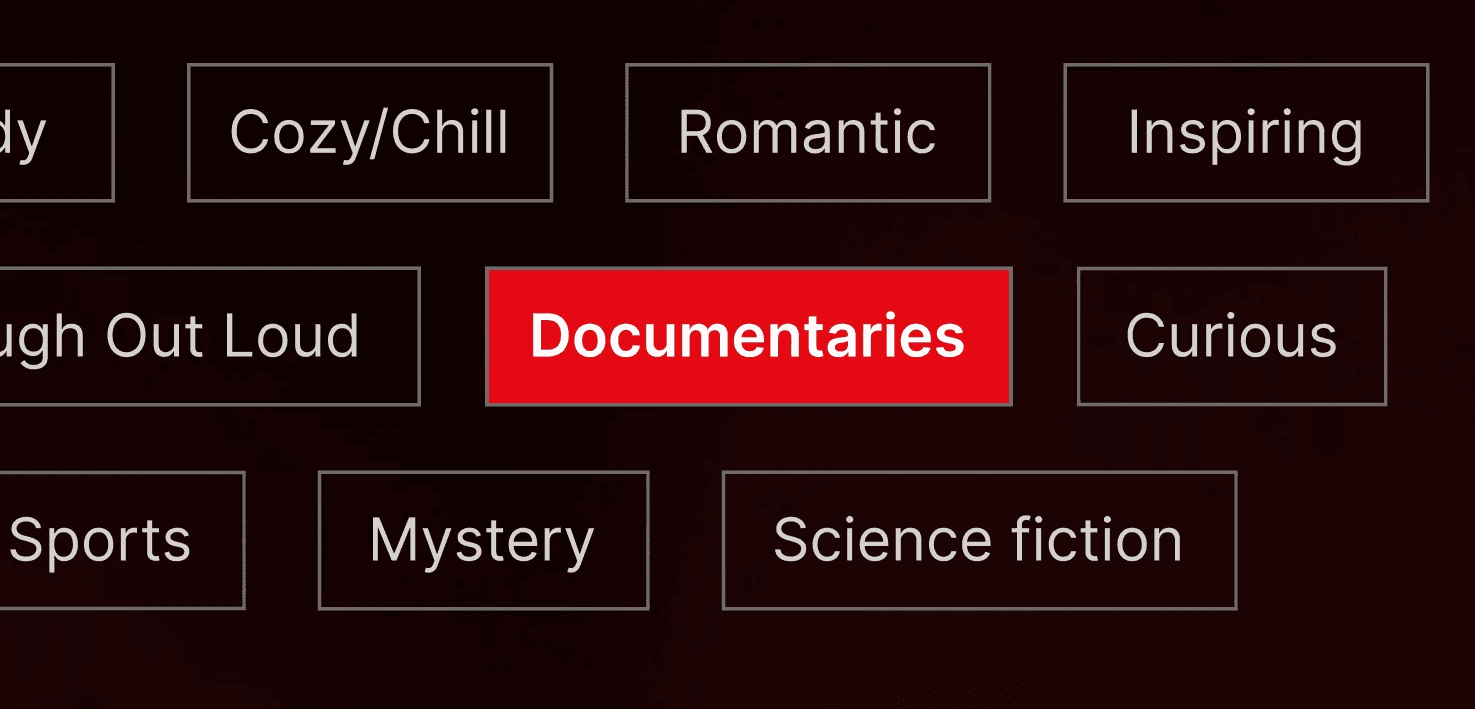
Tap pre-defined mood tags or type your own. Toggle between Movies and TV Shows.
Get a pick
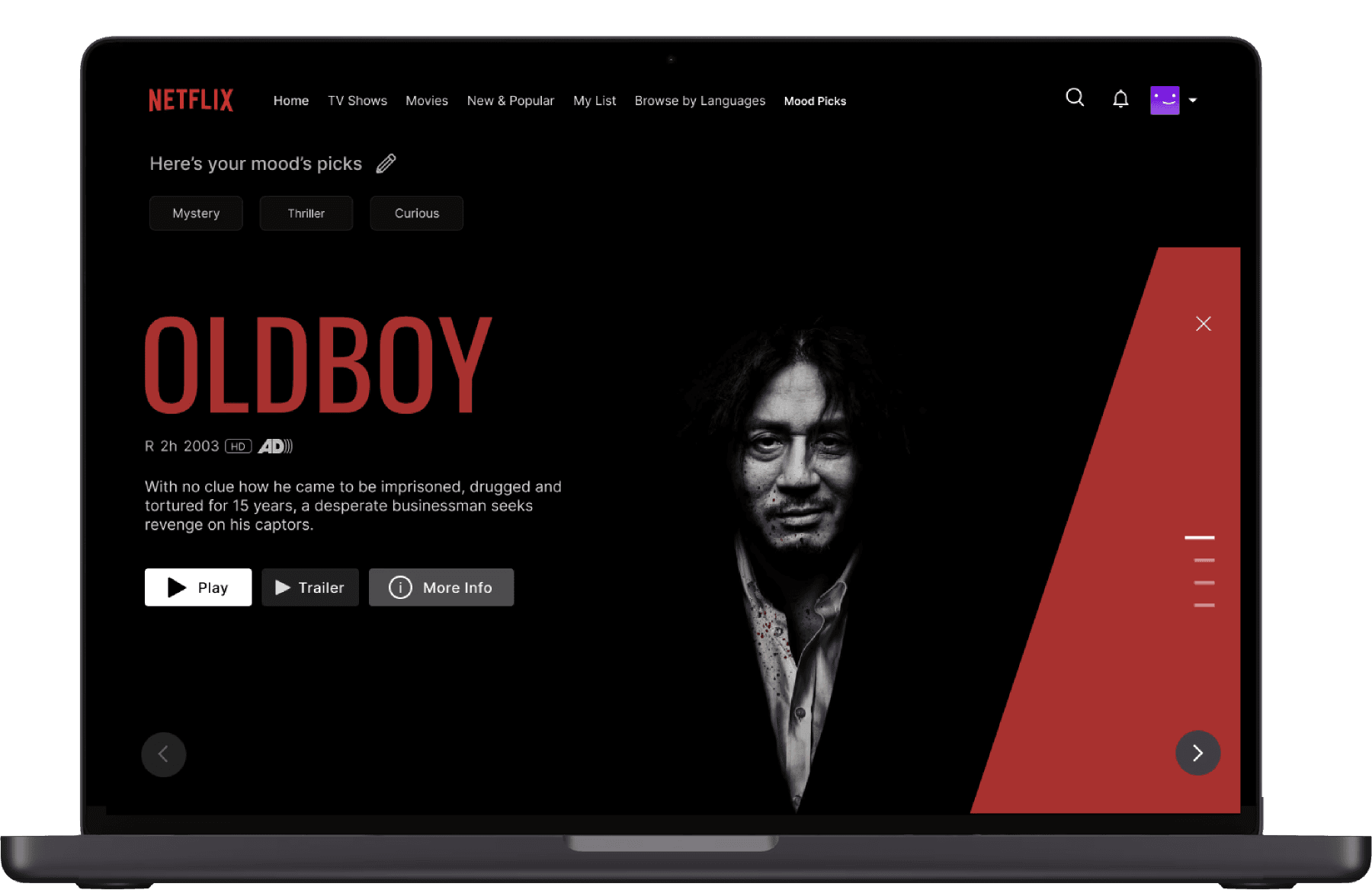
One curated recommendation. Play now, get more info, or try another.
Designing the experience:

06 - DESIGNS
Home Page
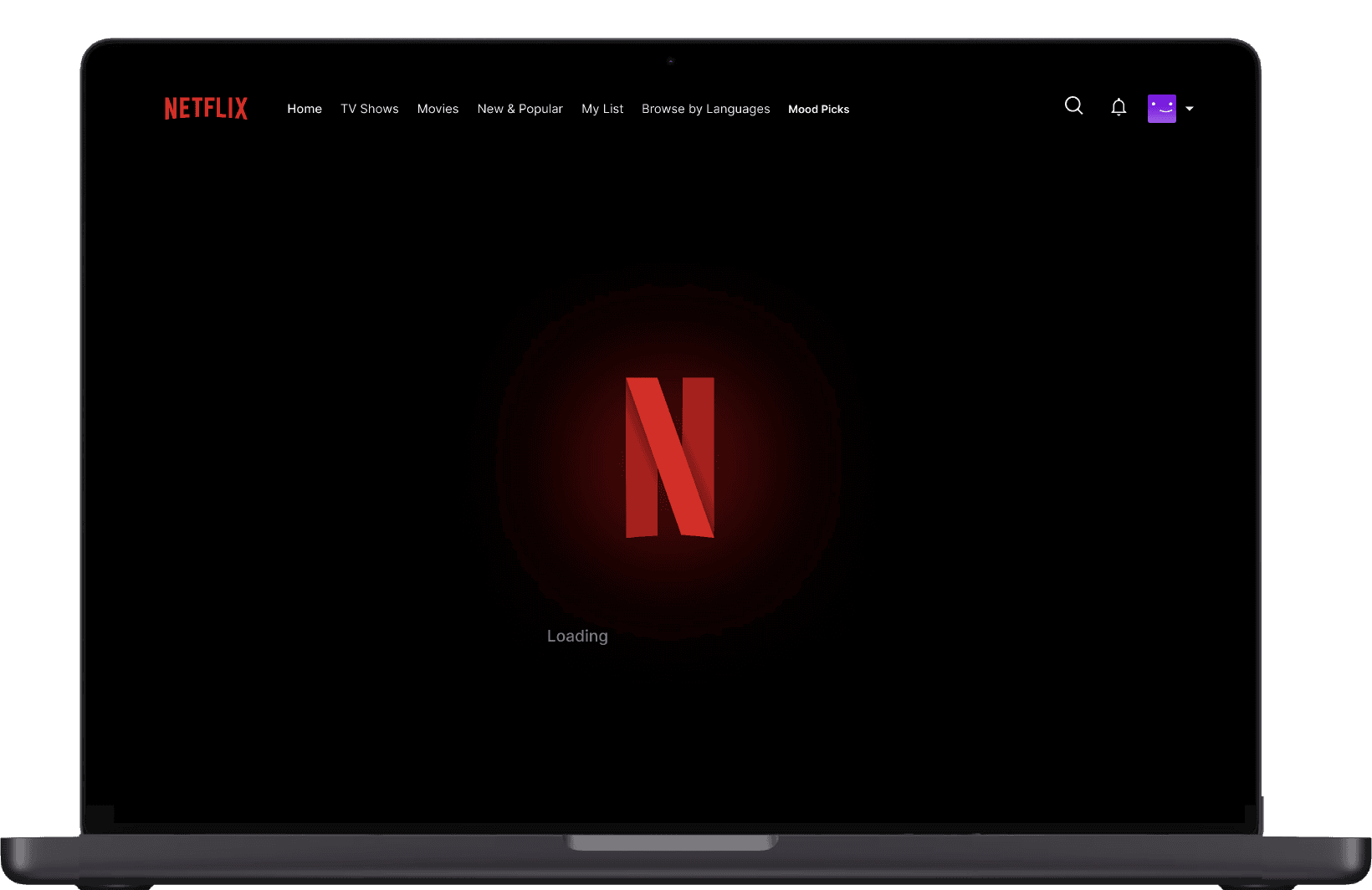
To use the content recommendation feature, users can click "Mood Picks" in the top menu. Or click the "Need Ideas" button.
Mood Selection Page
The users can choose the tags they like or type in what they want to watch. Users can also choose between Movies/TV Shows.
Recommendation Page
Displays a curated title (e.g., Oldboy) with quick options: Play Now, More Info, or Try Another.
07 - TESTING
Usability testing — what worked, what didn't
I ran moderated usability tests with 8 participants using a think-aloud protocol.
08 - REFLECTION
Mood Picks — a three-step flow
The strongest design instinct I developed on this project: resist the urge to add. Every complex idea I explored failed because it asked users to do work before they got value. The simplest version, tap a feeling, get a result — was also the one that tested best.
If I were to continue this: I'd run structured interviews to explore edge cases (users who can't name their mood, users who want to deliberately break their pattern), test whether the single-recommendation format holds up over repeated use as novelty fades, and explore how mood data could feed back into Netflix's broader recommendation engine without feeling intrusive.
The biggest open question is what happens at session 10, not session 1. That's the research I didn't get to do in 3 weeks.
Self-initiated concept project. No affiliation with Netflix.

