Summary
ServiceDesk Plus is an IT helpdesk platform used by organizations to manage support requests and technical issues. I aimed to solve challenges in the existing interface, such as cluttered layouts, confusing navigation, and a lack of clarity by enhancing usability, readability, and overall user experience.

Research
Research
UX Audit
Why I did it: To evaluate the existing ServiceDesk Plus interface and pinpoint where IT staff experienced friction.
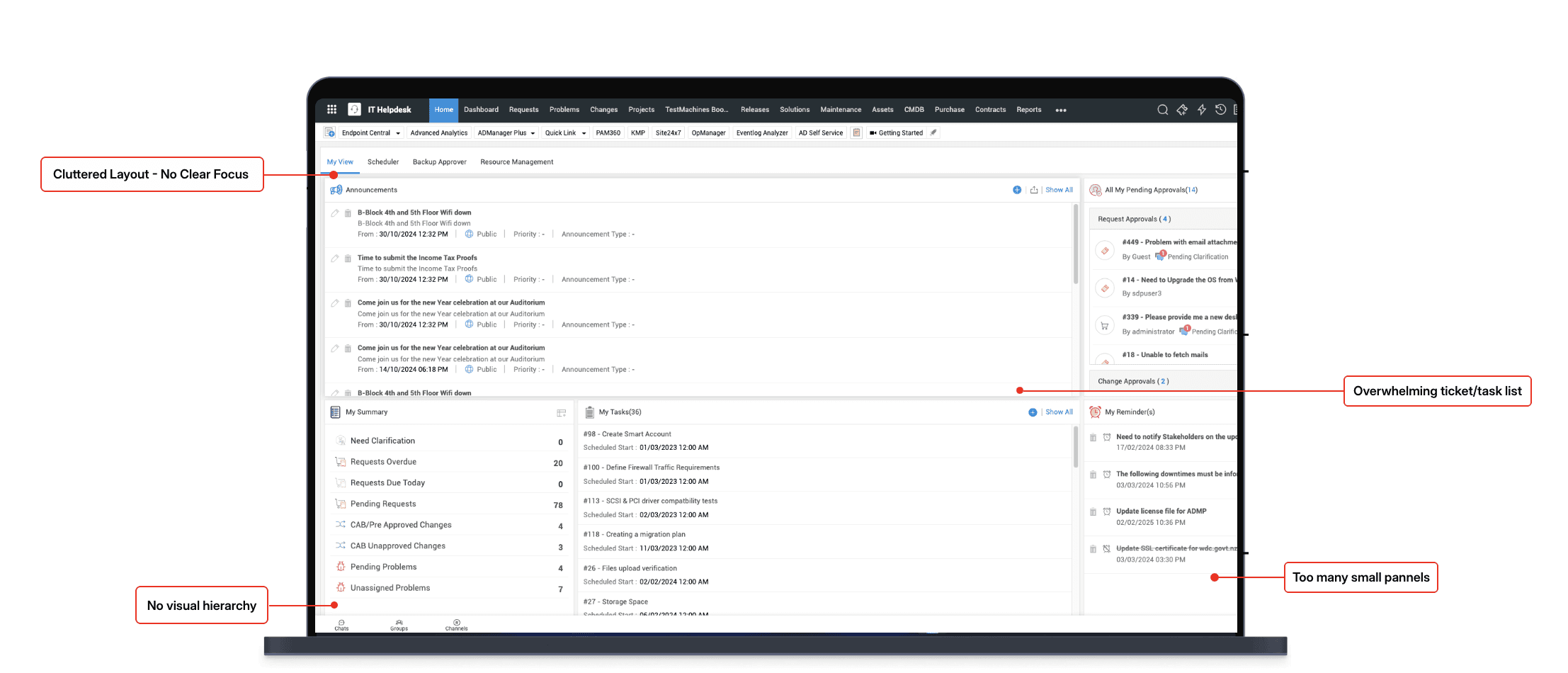
What I found out: While the platform offered robust functionality, it suffered from cluttered layouts, inconsistent navigation, and overwhelming ticket lists. Agents often spent unnecessary time scanning through unfiltered queues and switching between multiple views.
How it influenced my next move: This confirmed that the redesign needed to focus on clarity, hierarchy, and streamlined workflows tailored to IT staff efficiency.
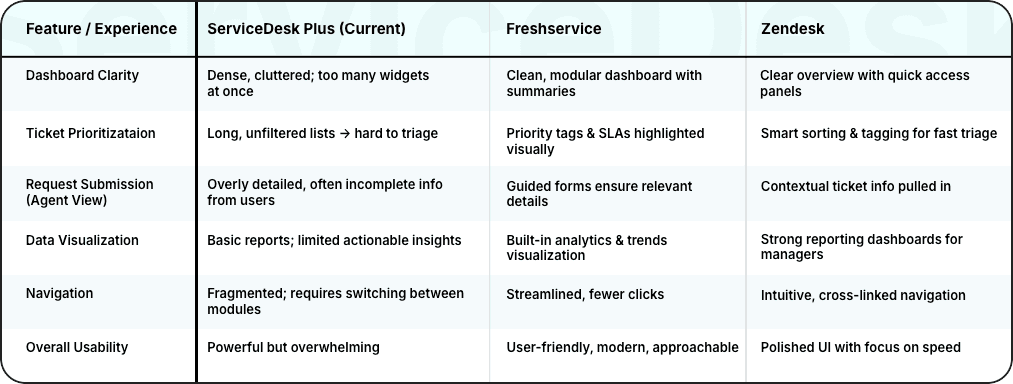
Competitive Analysis
Why I did it: To benchmark ServiceDesk Plus against other IT helpdesk tools and understand how they simplified complex workflows.
What I found out: Competitors like Freshservice and Zendesk emphasized clean dashboards, priority-based ticketing, and actionable data visualization. These tools made it easier for agents to prioritize and resolve issues quickly.
How it influenced my next move: Inspired by these patterns, I decided to introduce visual dashboards, simplified ticket views, and clearer prioritization mechanisms into my redesign.
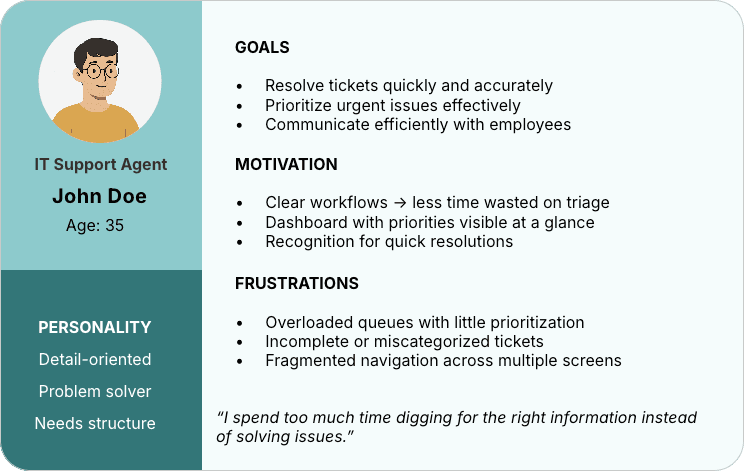
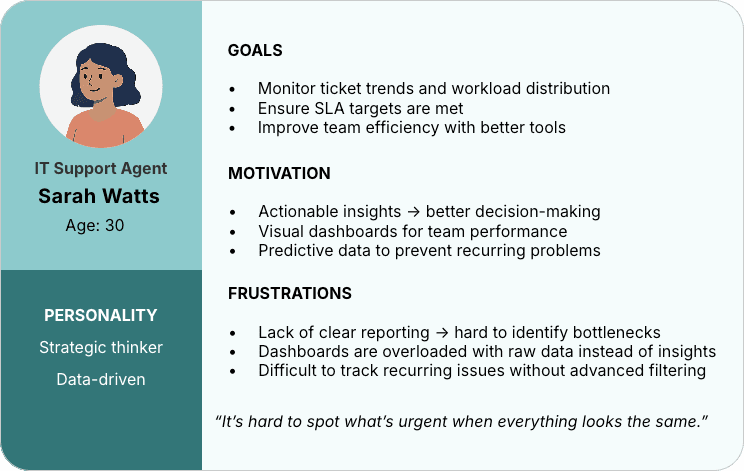
Personas:




Wireframes
Ideation
✏️ Paper Wireframes
Assumptions
Before redesigning ServiceDesk Plus, I made a few key assumptions to guide initial concepts and priorities:
IT support staff are the primary users of the helpdesk dashboard, rather than employees submitting tickets.
Agents prefer a clear and efficient interface that reduces clutter and highlights priorities.
A consistent visual hierarchy and simplified layouts will improve task management and reduce errors.
Most IT staff will access the platform on desktop devices during working hours.
Constraints
While redesigning ServiceDesk Plus, I also considered a few constraints that shaped what was possible:
Feature Preservation: Core ServiceDesk Plus functionality (Requests, CAB Approvals, Announcements, Problems) had to remain intact; the redesign focused on usability, not feature removal.
Time & Scope: The project prioritized key dashboards and homepage screens, rather than a full end-to-end redesign of every module.
Adoption Feasibility: The solution had to feel familiar enough to current users to reduce retraining needs, balancing innovation with practicality.
Desktop-First Focus: The design was optimized for desktop use, acknowledging that mobile optimization could be explored as a future phase.
🧩 Assumptions
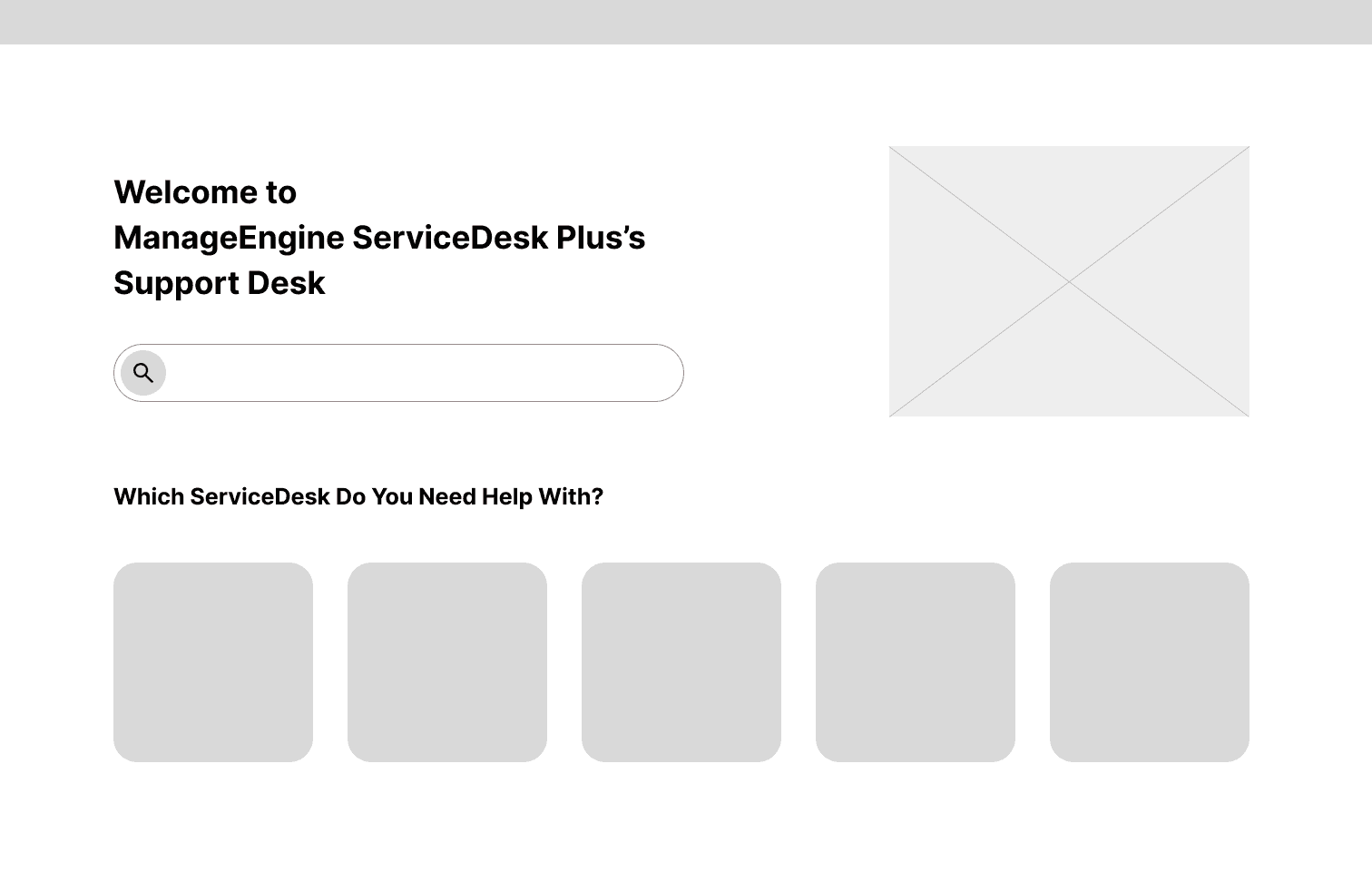
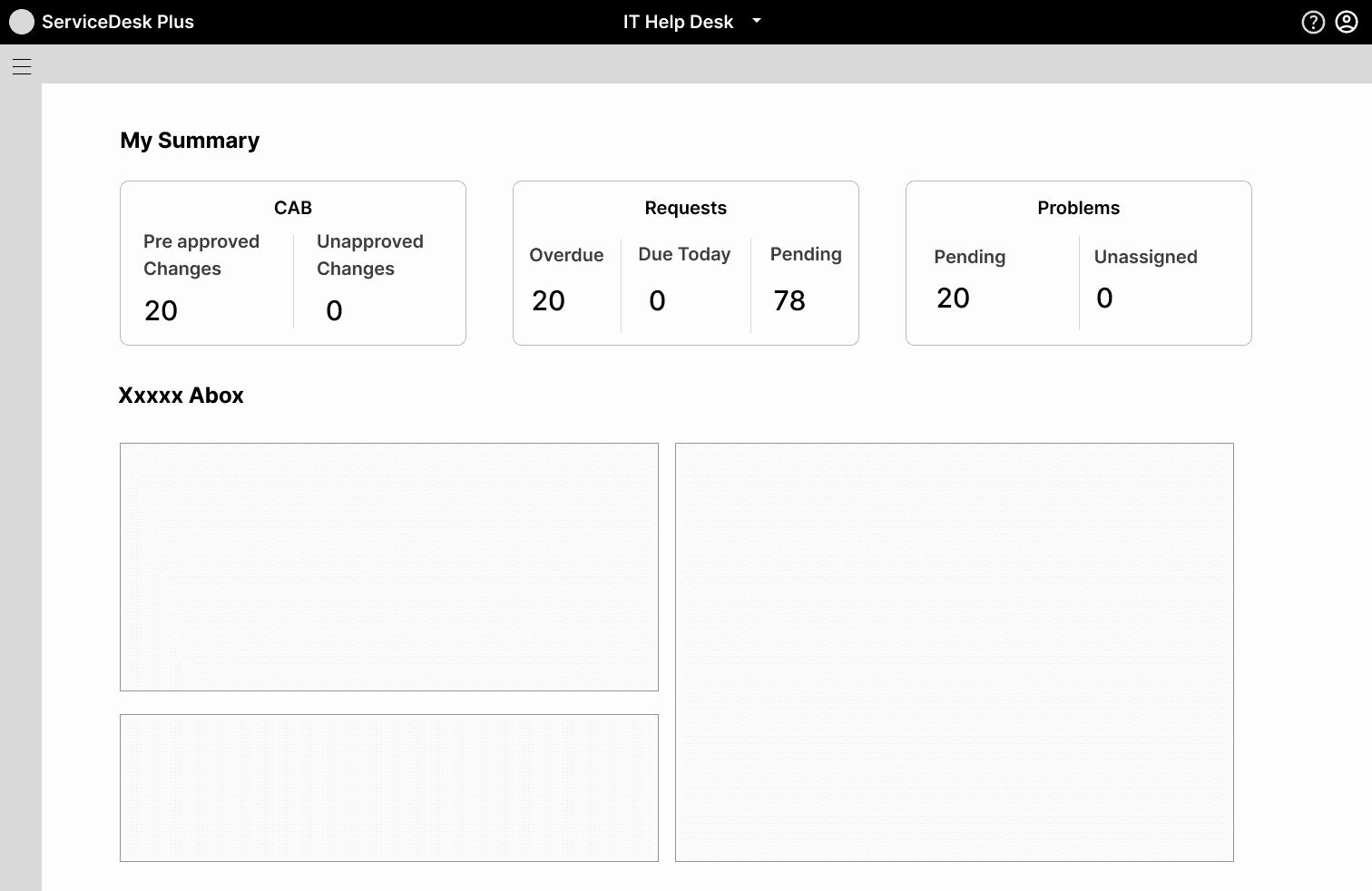

✏️ Paper Wireframes
Applied Designs
Applied Designs
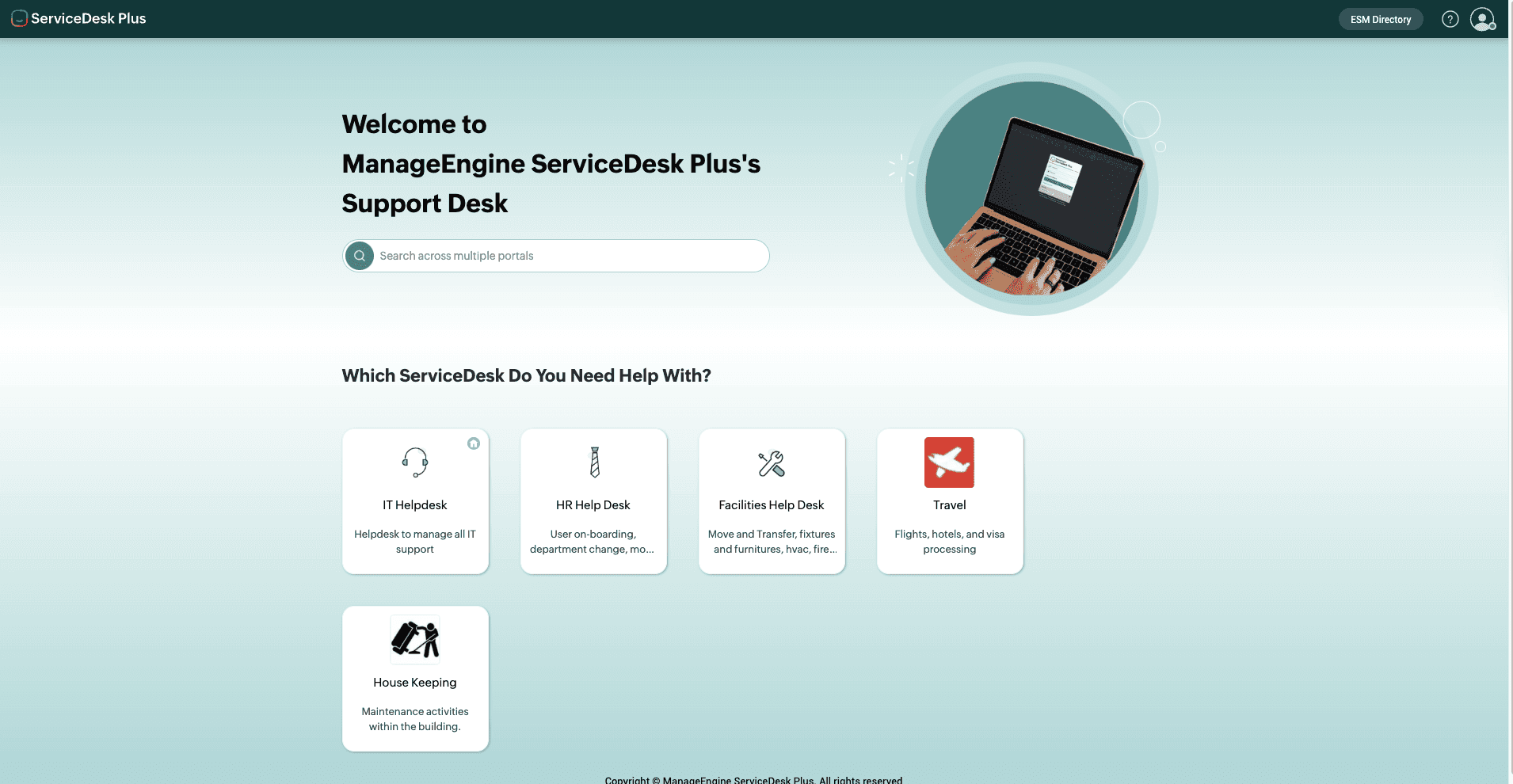
Home Page:
Issues - Existing Design
ⅹ Inconsistent icons reduced visual clarity.
ⅹ The large unused space made the layout inefficient.
ⅹ Categories were not visually distinct, slowing navigation.
Redesign Decisions
✔ Applied consistent iconography across categories.
✔ Balanced whitespace for a cleaner, more efficient layout.
✔ Introduced modern cards for clear, scannable categories.
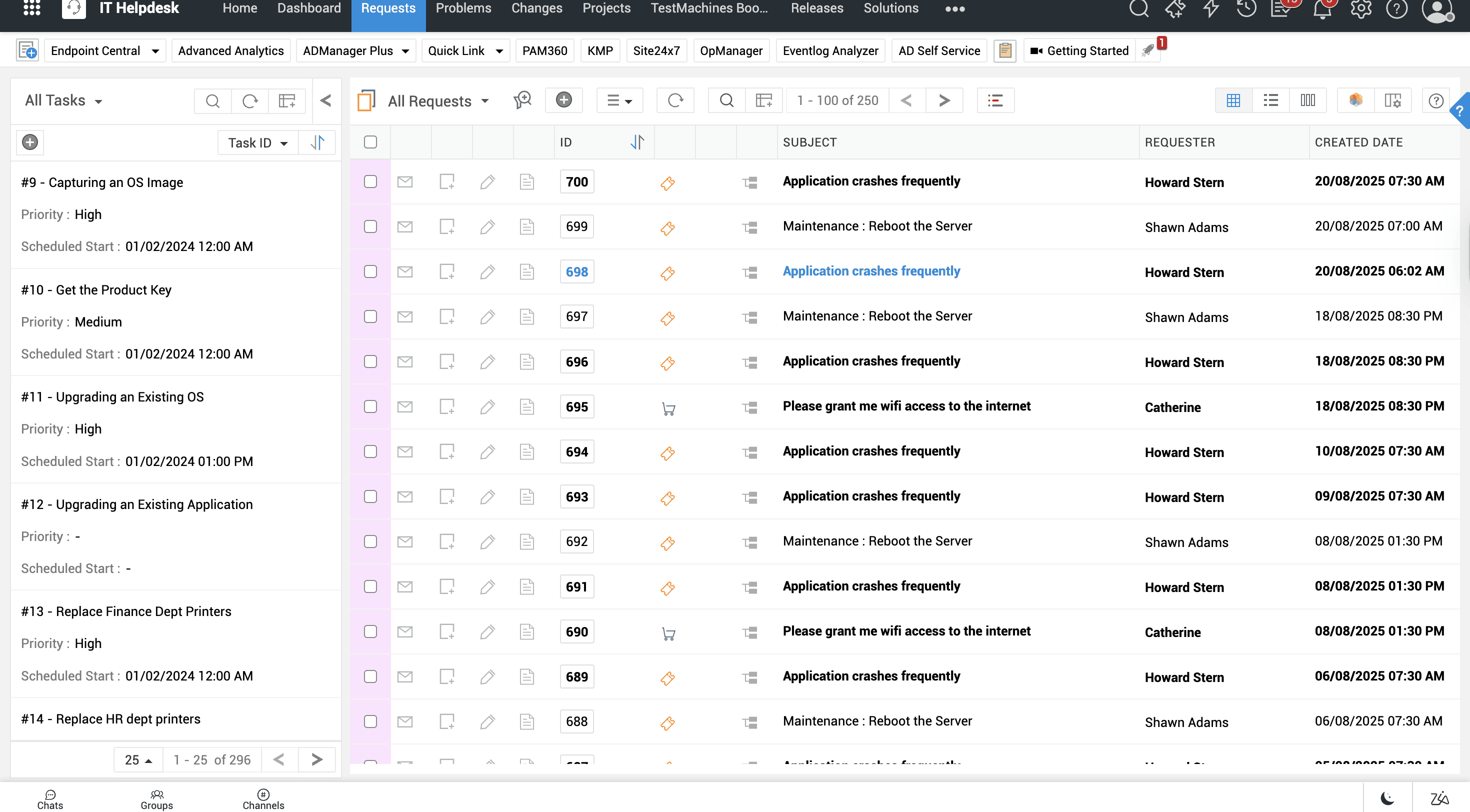
Tickets page:
Issues - Existing Design
ⅹ Dense tables with overwhelming text.
ⅹ Poor alignment and spacing reduced readability.
ⅹ Lack of hierarchy made it hard to prioritize tasks.
Redesign Decisions
✔ Simplified table design with consistent spacing.
✔ Applied visual hierarchy through column alignment and labels.
✔ Highlighted status/priority with color coding for quick decisions.
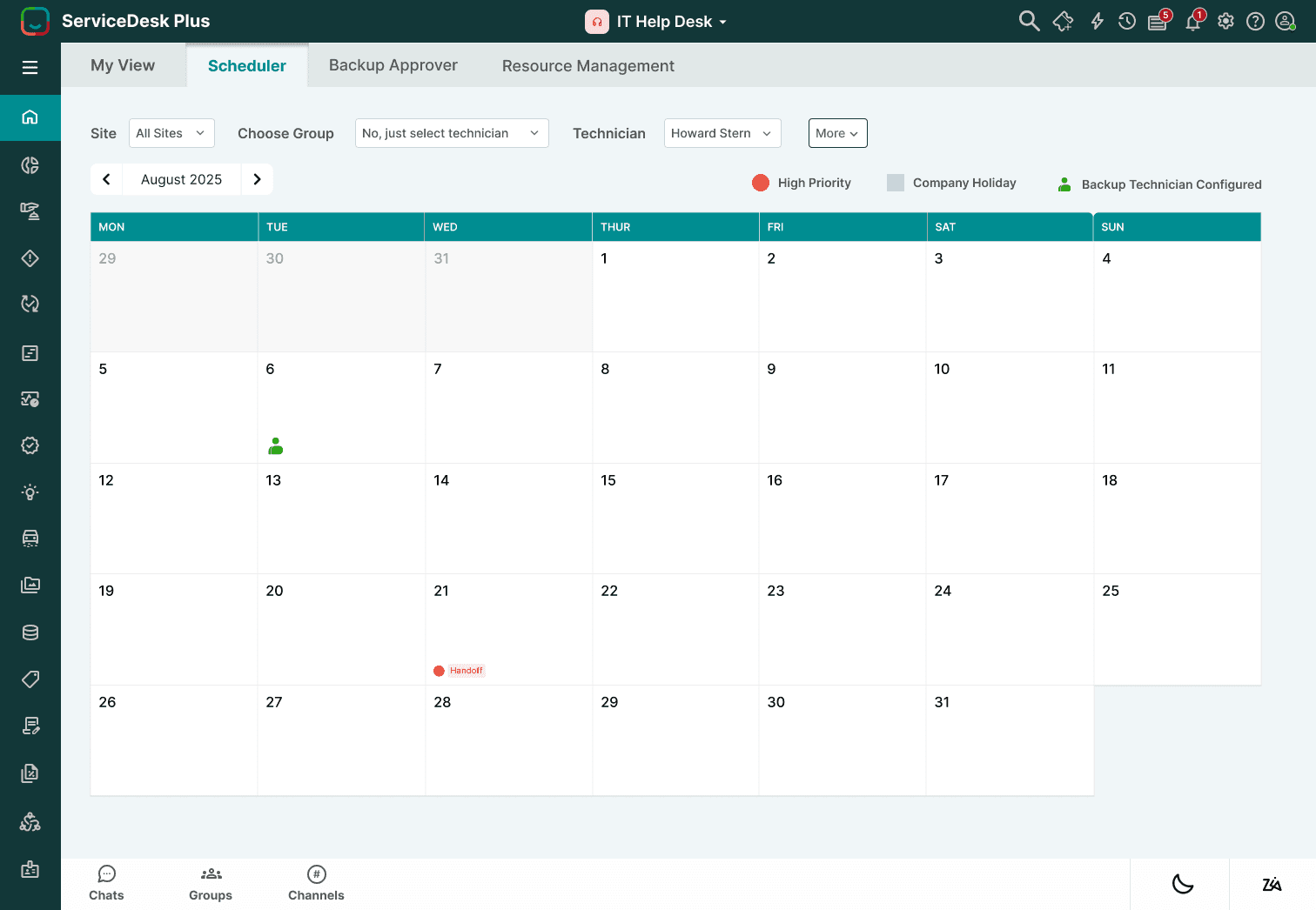
3. Calendar Page:
Issues - Existing Design
ⅹ Minimal styling made events difficult to distinguish.
ⅹ Poor hierarchy led to difficulty in scanning busy schedules.
ⅹ Lacked visual cues for priorities or deadlines.
Redesign Decisions
✔ Color-coded events to highlight status and priority.
✔ Improved layout with stronger grid and spacing.
✔ Clearer labels and hierarchy for faster scanning.
Dark Mode:
Issues - Existing Design
ⅹ Colors lacked contrast, reducing readability.
ⅹ Icons and cards blended into the background.
ⅹ The overall feel was dull and not visually engaging.
Redesign Decisions
✔ Improved contrast with a richer dark background.
✔ Bright accent colors for icons and categories.
✔ Modern, accessible dark mode that feels polished.
Final Designs
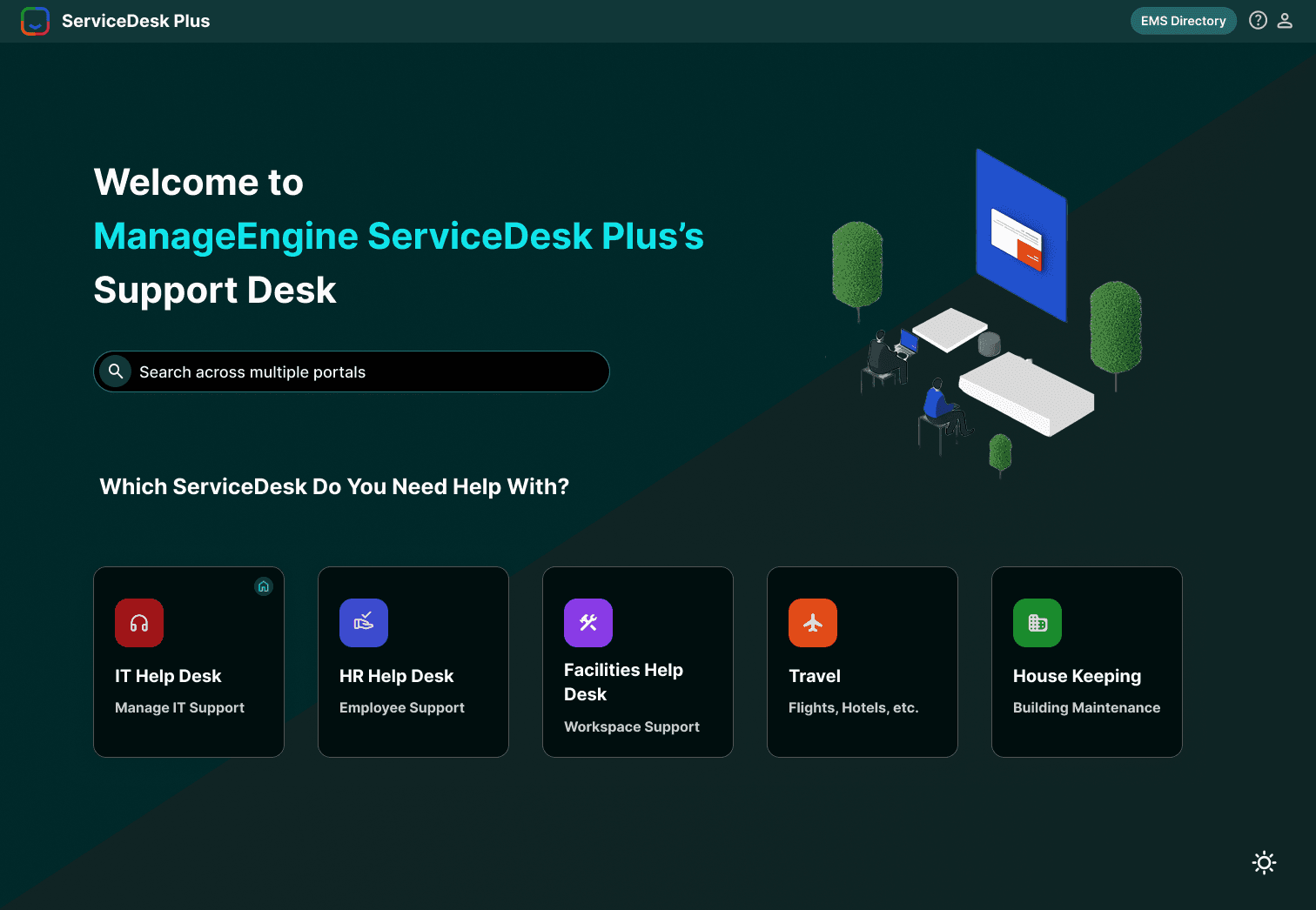
HomePage
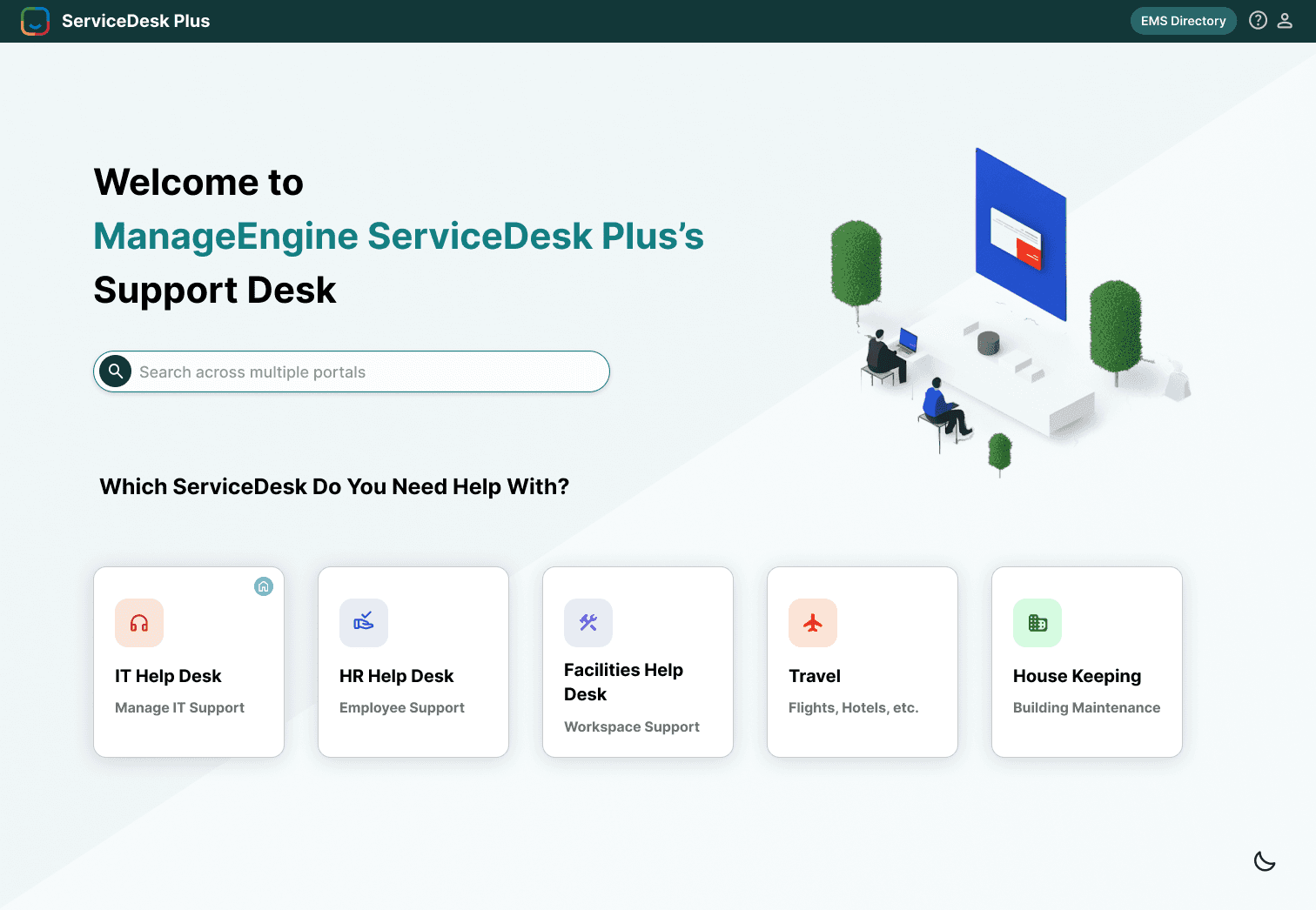
This is the homepage where users can see all the ServiceDesk categories clearly laid out, including IT Help Desk, HR Help Desk, Facilities Help Desk, Travel, and Housekeeping. A search bar is available at the top for quick access across portals, and the clean layout with consistent icons makes it easy to navigate.
IT Help Desk (My View)
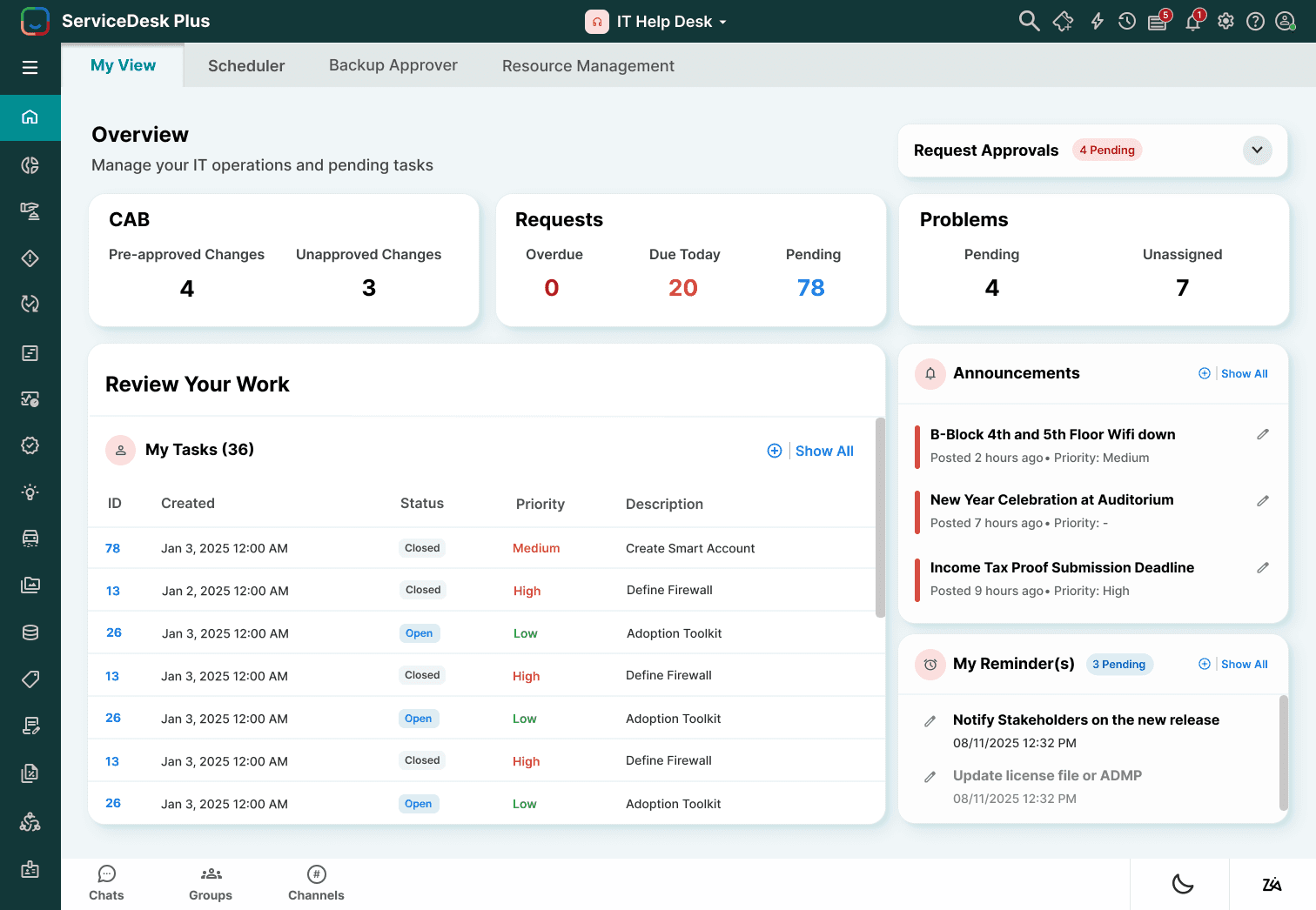
This is the IT Help Desk ‘My View’ screen, where agents can see a summary of CAB approvals, requests, and problems at a glance. Below that, the ‘Review Your Work’ section highlights tasks, announcements, and reminders, bringing everything the agent needs for the day into one place.
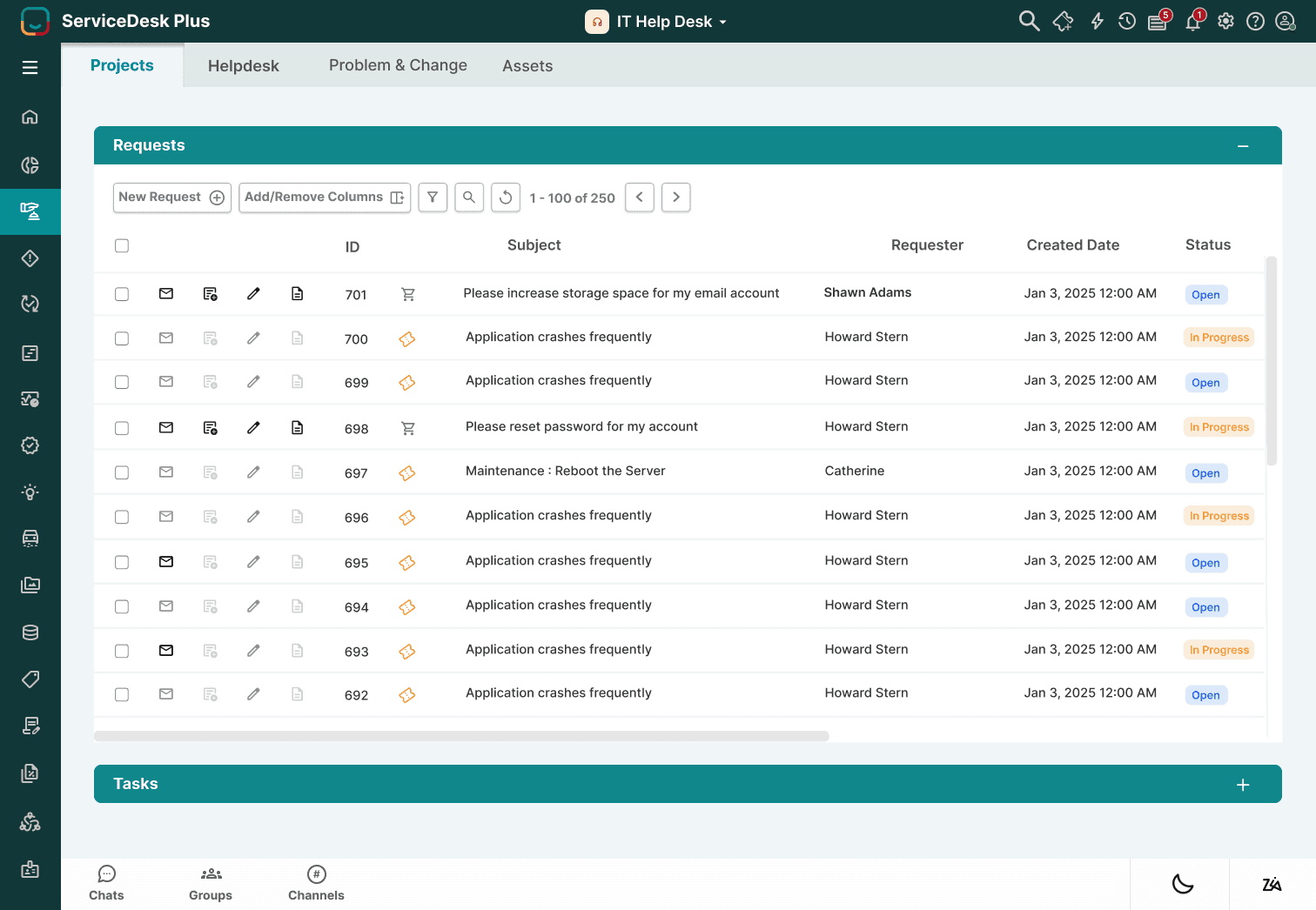
Dashboard & Requests
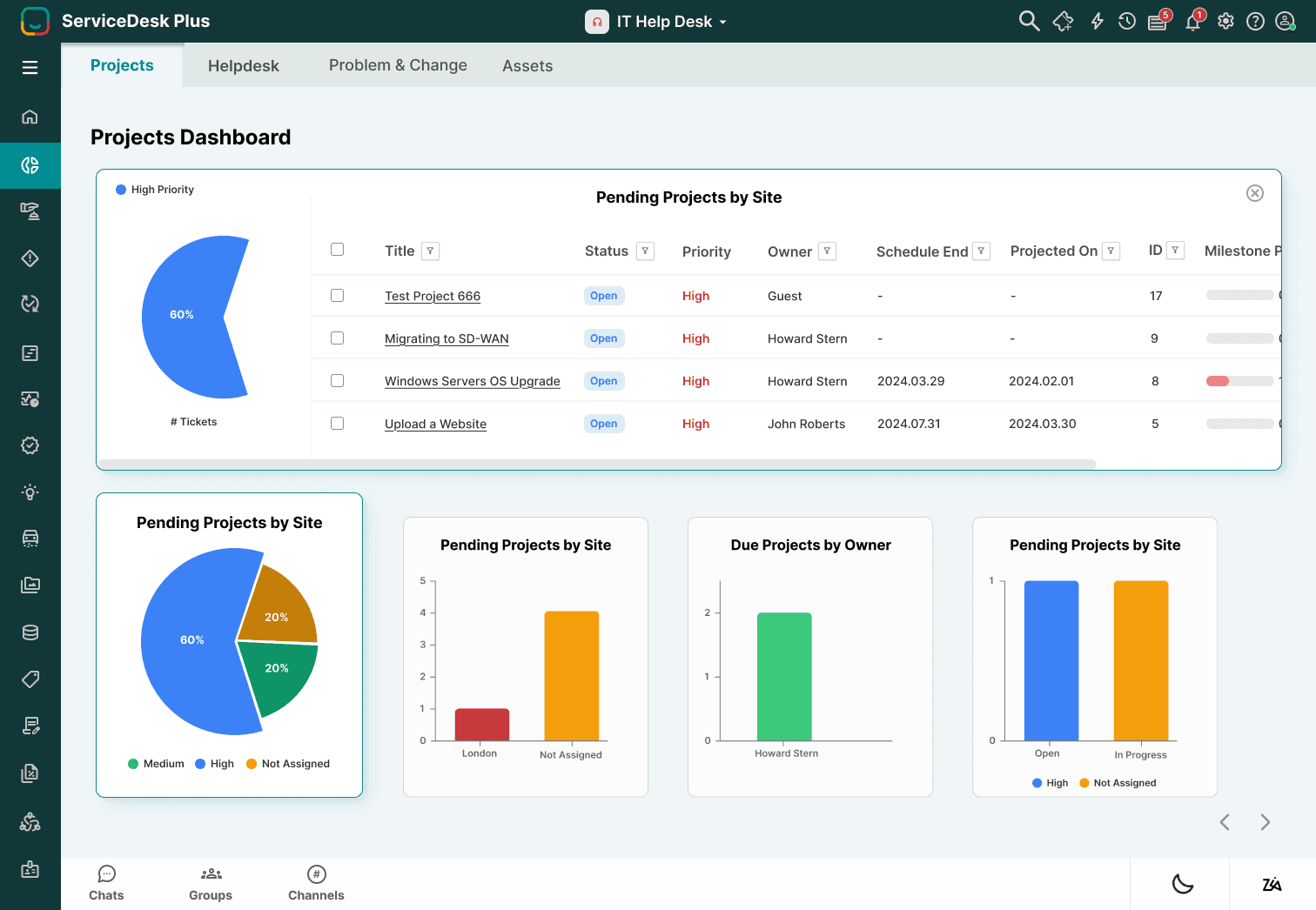
This is the Dashboard view, where users can see visual insights into pending projects, overdue tasks, and workload distribution through charts. The Requests section lists detailed tickets with their status, priority, and assigned owner, allowing IT staff to track and manage issues more effectively.
Dark Mode
This is the Dark Mode version of the redesigned interface.
The homepage, dashboard, and IT Help Desk views are all adapted into a darker color scheme, reducing eye strain and offering users more flexibility depending on their work environment.
If I had more time…
If I had more time, I would:
Conduct usability testing with real IT staff to validate my redesign decisions.
Explore mobile-first adaptations, since this version was designed primarily for desktop use.
My Learnings
I learned how clutter and poor hierarchy can overwhelm users, and how reorganizing layouts with clear grouping and whitespace can make complex tools more usable.
I realized the importance of focusing on user empathy — even without formal research, considering IT staff roles (agents and managers) guided my design choices.
I strengthened my ability to balance functionality with simplicity, ensuring key features remained while reducing visual noise.
Although I did not conduct full usability testing, I asked a developer’s opinion during the design process. Their perspective helped me refine the screens to ensure the redesign was not only visually clean but also technically practical.
Explore additional case studies showcasing my approach to user research, interaction design, and creating meaningful experiences.

